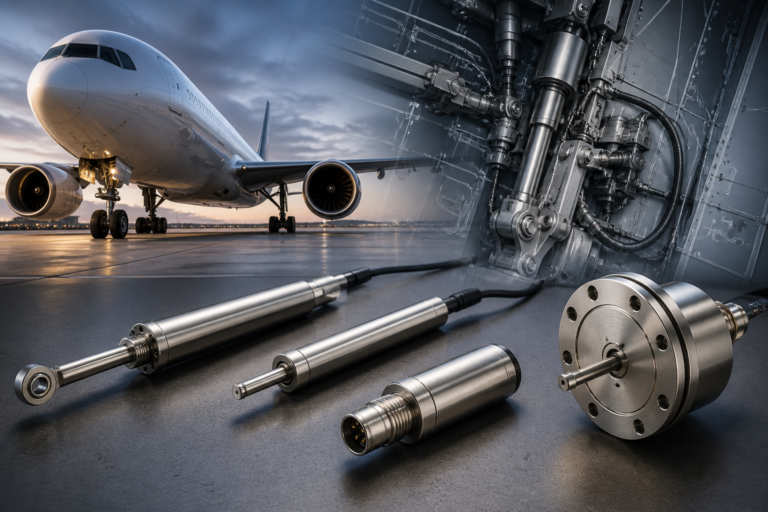
















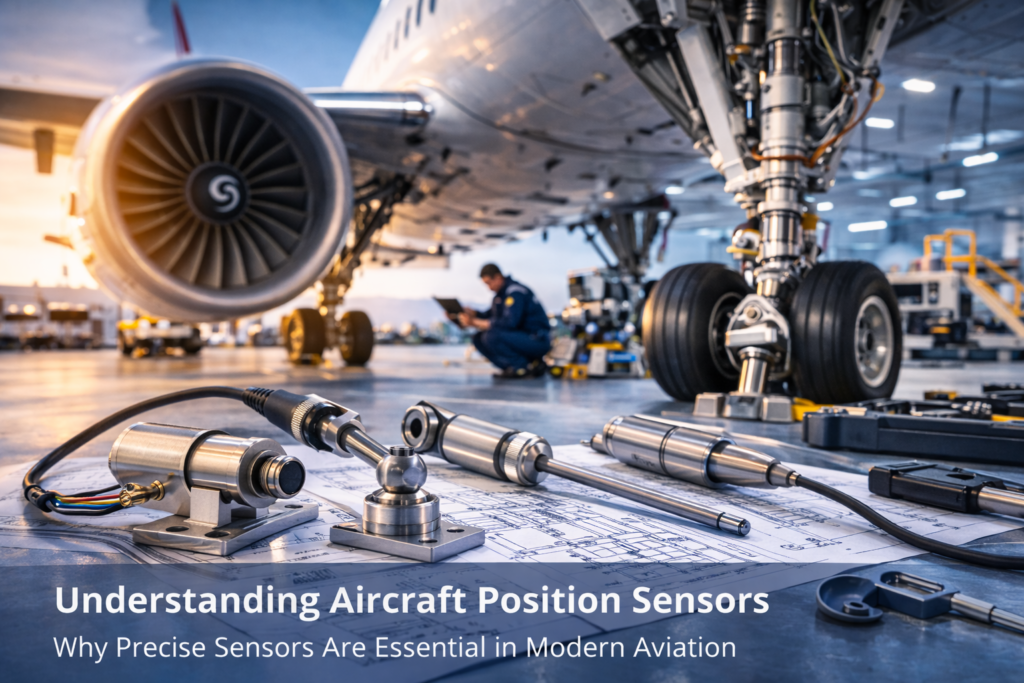
Modern aircraft are built on a foundation of precision engineering. Every movement inside an aircraft system must be monitored, controlled, and verified to ensure safe operation. From landing gear deployment to the movement of flight control surfaces, accurate measurement is essential.
One of the most important technologies supporting these systems is the aircraft position sensor. These sensors measure mechanical movement and provide continuous feedback to aircraft control systems.
In aviation, even the smallest movement can affect performance and safety. Position sensing technology helps engineers track these movements with high accuracy. This information allows aircraft systems to respond quickly and correctly to changing flight conditions.
Across the global aviation industry, including rapidly growing aerospace sectors in the United Arab Emirates and the broader Middle East region, sensor technology plays a key role in maintaining aircraft reliability and operational safety.
This article explains how aircraft position sensors work, where they are used, and why they are essential components in modern aerospace systems.
Understanding Aircraft Position Sensors
A position sensor is a device designed to measure the location or movement of a mechanical component. In aircraft systems, these sensors monitor parts that move or change position during operation.
Position sensors convert mechanical motion into electrical signals that can be interpreted by aircraft computers. These signals allow onboard systems to determine the exact position of components such as valves, actuators, control surfaces, and landing gear assemblies.
Without accurate position data, aircraft systems would not be able to confirm whether critical components are functioning correctly.
For example, when landing gear deploys before landing, the aircraft must confirm that the gear has reached the correct locked position. Sensors provide this confirmation by measuring the exact displacement of the mechanical assembly.
Types of Sensors Used for Aircraft Position Measurement
Several types of sensors are used in aerospace engineering to monitor mechanical position and movement. Each technology has unique advantages depending on the specific application.
Linear Displacement Sensors
Linear displacement sensors measure movement along a straight path. These sensors are commonly used to monitor actuator movement and mechanical travel within aircraft systems.
They provide continuous measurement data that allows control systems to determine exactly how far a component has moved.
Rotary Position Sensors
Rotary sensors measure angular movement rather than linear motion. These sensors are used in systems where components rotate, such as throttle controls or engine mechanisms.
They track the angle of rotation and convert this motion into electrical signals.
Magnetic Position Sensors
Magnetic-based sensors detect movement through changes in magnetic fields. These sensors are often used in environments where durability and resistance to vibration are important.
Because aircraft systems operate under significant mechanical stress, magnetic sensors can provide reliable performance in demanding conditions.
Why Accurate Position Measurement Matters in Aviation
Aircraft systems must operate with extremely tight tolerances. Even a small measurement error can affect system performance.
Accurate position sensors allow aircraft systems to maintain stability, respond correctly to pilot inputs, and confirm the status of mechanical components.
Improved Flight Control
Flight control surfaces such as flaps, rudders, and ailerons rely on accurate position feedback. Sensors provide the data needed for flight control computers to adjust these surfaces in real time.
Reliable Landing Gear Operation
Landing gear deployment is one of the most critical mechanical actions during a flight. Position sensors confirm whether the gear has fully deployed and locked into place before landing.
Hydraulic System Monitoring
Hydraulic actuators power many aircraft components. Position sensors help monitor actuator movement to ensure systems operate within the correct range.
Engine System Feedback
Certain engine components require precise mechanical adjustments. Sensors help monitor these adjustments and maintain optimal engine performance.
Advantages of Advanced Aerospace Sensors
Modern aerospace sensors are designed to operate under extreme conditions. Aircraft systems experience vibration, temperature fluctuations, pressure changes, and mechanical stress.
Despite these challenges, advanced sensor technologies offer several advantages.
High Measurement Accuracy
Precision sensors can detect extremely small mechanical movements. This accuracy ensures that aircraft systems respond correctly to changing conditions.
Long Operational Life
Many aerospace sensors are designed to operate for millions of cycles without significant wear.
Reliable Performance
Sensors used in aviation must maintain consistent performance even under harsh environmental conditions.
Minimal Maintenance
Because many modern sensors operate with minimal mechanical contact, they require very little maintenance during their service life.
The Role of Sensor Technology in Aircraft Maintenance
Sensors are not only important during flight operations. They also play a significant role in aircraft maintenance and inspection processes.
Maintenance engineers rely on sensor data to evaluate the performance of aircraft systems. By analyzing sensor readings, technicians can detect abnormal movements, wear, or mechanical issues before they become serious problems.
This approach is often called predictive maintenance. Instead of waiting for a system failure, engineers use sensor data to identify potential issues early.
Predictive maintenance improves aircraft safety while also reducing downtime and maintenance costs.
Sensor Innovation in the UAE Aerospace Industry
The United Arab Emirates has emerged as an important hub for aviation and aerospace development. With major international airlines, world class airports, and growing aerospace manufacturing capabilities, the region continues to invest heavily in advanced aviation technologies.
Precision sensor systems are an important part of this technological growth. As aircraft fleets expand and maintenance facilities adopt modern engineering practices, the demand for high-quality aerospace components continues to rise.
Organizations involved in aircraft maintenance, repair, and engineering rely on advanced sensor technologies to support safe and efficient operations.
The UAE’s focus on innovation and aviation excellence ensures that aerospace technology will continue evolving across the region.
Future Trends in Aerospace Sensor Technology
Sensor technology is advancing rapidly. Modern aircraft systems are beginning to integrate sensors with digital communication networks and data analytics platforms.
In the future, aerospace sensors will likely become even more intelligent and interconnected.
Some emerging trends include:
Smart sensors capable of transmitting real-time performance data
Integration with aircraft health monitoring systems
Enhanced durability for extreme environments
Greater compatibility with automated maintenance systems
These developments will help aviation engineers monitor aircraft systems more effectively and improve operational reliability.
Conclusion
Aircraft systems depend on precise measurement and reliable monitoring. Position sensors play a critical role in ensuring that mechanical components operate safely and accurately throughout every phase of flight.
From flight control surfaces to landing gear assemblies, sensors provide the essential data needed to verify system performance and maintain operational safety.
As the aerospace industry continues to evolve, advanced sensor technology will remain an essential part of aircraft design, maintenance, and operational monitoring.
For aviation engineers, maintenance professionals, and aerospace organizations, understanding the importance of position sensing technology is key to supporting the next generation of safe and efficient aircraft systems.