















Aircraft systems rarely fail because of one dramatic event.
More often, problems begin quietly.
A small positional inconsistency inside a hydraulic actuator. A delayed response from a feedback control assembly. Slight measurement drift that nobody notices during the first hundred operating hours. Then eventually, performance changes. Maintenance teams start chasing irregular readings. System calibration becomes inconsistent.
This is exactly why precision sensing technology still matters so much in aerospace engineering.
And honestly, it matters more now than it did ten years ago.
Modern aircraft systems rely heavily on accurate motion feedback, displacement monitoring, and real-time positional data. Without reliable sensors, even advanced aerospace platforms lose operational stability over time.
That’s where LVDT sensors continue proving their value.
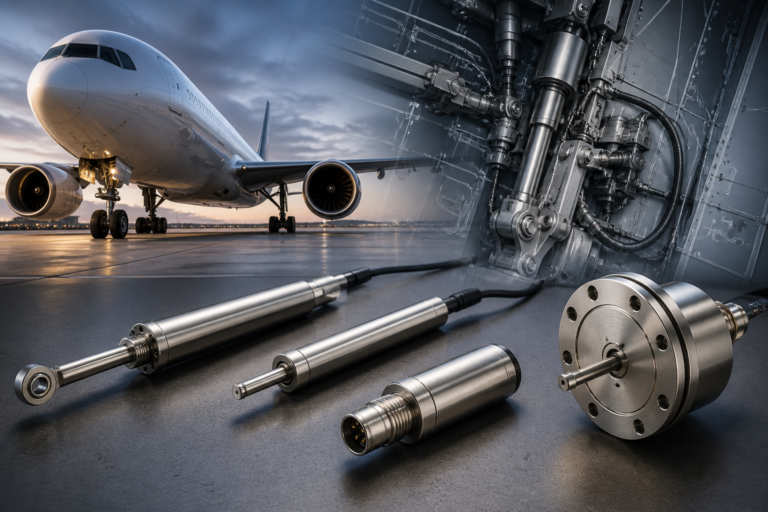
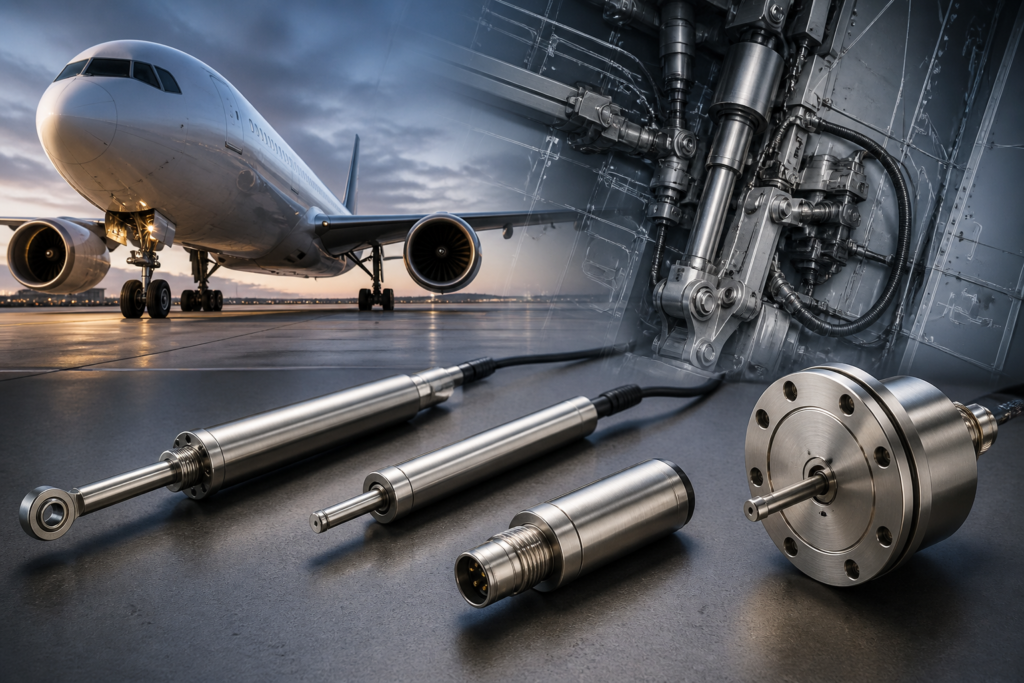
Especially aerospace-grade solutions like the Kavlico GM Series LVDT and RVDT sensors supplied through Inventechs for aviation, defense, and industrial applications across the UAE and GCC region.
Not because these sensors are fashionable technology.
Because they survive real operational environments.
What Is an LVDT Sensor and Why Does It Matter?
An LVDT sensor, or Linear Variable Differential Transformer, is a highly accurate electromechanical device used to measure linear displacement.
In simpler terms, it measures movement in a straight line.
The working principle is elegant in a very engineering-focused way. Inside the sensor, a movable magnetic core shifts position between transformer windings. As movement occurs, the sensor converts that motion into a proportional electrical signal.
The output reflects exact positional movement.
That precision becomes incredibly valuable in aerospace systems where tiny mechanical variations can influence larger operational functions.
One important advantage stands out immediately.
LVDT sensors operate with almost no physical contact between moving internal components.
Less friction. Less wear. Better long-term stability.
That matters inside aircraft environments where systems experience vibration, thermal stress, hydraulic pressure fluctuations, and continuous operational cycling.
Honestly, many conventional sensing technologies struggle in those conditions over time.
LVDT sensors were practically built for them.
Aerospace Systems Demand Precision That Does Not Drift
Aircraft environments are brutal on electronic components.
Extreme temperatures during altitude shifts. Constant vibration. Mechanical pressure loads. Tight operational tolerances.
There is very little room for sensing error.
This is why leading aircraft parts manufacturers continue integrating aerospace-grade position sensors into critical systems including:
- Flight control systems
- Hydraulic actuator assemblies
- Landing gear monitoring systems
- Thrust reverser controls
- Valve positioning mechanisms
- Engine control systems
- Aerospace automation platforms
A slight positional error can affect larger system behavior over time.
And in aerospace engineering, long-term consistency matters almost more than initial performance.
Some sensors perform well during installation testing but degrade gradually after prolonged operational exposure.
That creates dangerous uncertainty.
Kavlico LVDT sensors are designed specifically to reduce that risk through stable non-contact sensing technology engineered for demanding environments.
Why Kavlico Sensors Have Strong Aerospace Recognition
There’s a reason aerospace engineers continue trusting Kavlico aerospace sensors for demanding aviation and defense applications where signal stability matters over long operational cycles.
And aerospace industries do not hand out trust easily.
Kavlico sensors are commonly associated with:
- Aerospace displacement sensing
- Hydraulic pressure monitoring
- Aviation control systems
- Industrial automation feedback systems
- Defense-grade sensing applications
- Position monitoring technologies
One thing engineers often appreciate about aerospace-grade sensing products is consistency under stress.
Marketing language means very little if the component cannot maintain stable performance after years of vibration exposure and environmental pressure.
Kavlico sensing solutions continue gaining demand because operational reliability still wins over flashy specifications.
Especially in aerospace.
Understanding the GM Series LVDT Sensors
The GM Series sensors represent a highly specialized range of aerospace and industrial position sensing solutions designed for accurate displacement measurement and rugged operational durability.
These sensors are widely recognized for their ability to maintain stable signal performance across demanding operating conditions.
And that reliability matters.
Particularly in aviation systems where continuous operational accuracy affects both safety and maintenance efficiency.
Some of the widely searched and requested GM Series sensor models include:
- GM66425 Transducer
- GM10864 LVDT
- GM517700-2
- GM517200 Series
- GM7130 LVDT
- GM7184 Series
- GM1032 Probe Series
- GM9791 RVDT Rotary Transducer
These products are commonly associated with aerospace actuator systems, Boeing aircraft programs, industrial automation systems, and precision displacement monitoring applications.
For example, the Kavlico GM66425 Transducer supports Boeing 747 program applications and is engineered for aviation-grade operational environments.
That level of aerospace integration says a lot about the engineering standards involved.
Why Non-Contact Sensor Technology Still Outperforms Many Alternatives
There’s a reason aerospace engineering still values non-contact sensing systems heavily.
Wear reduction.
Traditional contact-based sensors can gradually lose precision because of friction between moving components. Over time, operational accuracy decreases.
LVDT technology avoids much of that mechanical degradation.
Because the sensing mechanism operates without direct internal contact, the sensor can maintain consistent performance across long operational cycles.
That creates several operational advantages:
- Longer sensor lifespan
- Better measurement repeatability
- Reduced maintenance frequency
- Improved reliability under vibration
- More stable long-term output signals
Aircraft maintenance teams notice these differences quickly.
And honestly, reduced maintenance downtime becomes financially important very fast in aviation operations.
Why UAE Aerospace Companies Need Reliable Sensor Suppliers
The aerospace sector across the UAE and GCC region continues expanding rapidly.
Aviation infrastructure development, defense modernization programs, and advanced industrial manufacturing growth have increased demand for aerospace electronic components and precision sensing technologies.
But buyers are changing too.
Companies are becoming far more selective when sourcing aerospace sensors and aircraft electronic components.
They want:
- Proven aerospace-grade products
- Long operational lifecycle performance
- Technical documentation support
- Reliable aftermarket service
- Aviation certification compatibility
- Stable supply chain availability
That shift is actually healthy for the industry.
Cheap sensing components often create expensive operational failures later.
Inventechs supports aerospace and industrial sectors with advanced sensing technologies designed for demanding operational environments where reliability cannot become optional.
Commercial Applications of GM Series Sensors Beyond Aerospace
Although aerospace applications dominate much of the discussion around LVDT sensors, these technologies are also heavily used across industrial sectors requiring accurate linear displacement measurement.
Applications include:
Industrial Automation
Automated manufacturing systems depend on accurate positional feedback for motion control and production consistency.
Small positional errors can affect entire manufacturing cycles.
Petroleum and Energy Industries
Harsh industrial environments require rugged sensors capable of surviving pressure fluctuations, vibration, and temperature extremes.
Renewable Energy Systems
Advanced monitoring systems increasingly depend on precision motion sensing for equipment performance optimization.
Defense Systems
Military-grade operational environments require dependable sensing solutions capable of maintaining performance stability under stress conditions.
Again, reliability becomes everything.
Choosing the Right Aerospace LVDT Sensor
Selecting the right LVDT sensor depends heavily on operational requirements.
Not every sensor fits every aerospace or industrial application.
Important considerations include:
Environmental Conditions
Temperature exposure, vibration intensity, pressure variation, and humidity all affect sensor selection.
Measurement Accuracy
Different aerospace systems require different displacement tolerances and response sensitivities.
Operational Lifecycle Expectations
High-cycle operational systems need sensors capable of maintaining stable performance over extended service periods.
System Compatibility
Signal integration with existing aerospace or industrial control systems must remain reliable and consistent.
This is why working with experienced aerospace component suppliers matters.
Product knowledge alone is not always enough.
Application understanding matters too.
Inventechs and Advanced Aerospace Sensing Solutions
Inventechs continues supporting aerospace, defense, petroleum, and industrial sectors with specialized sensing technologies designed for demanding applications.
The company supplies advanced aerospace components including:
- Kavlico LVDT sensors
- RVDT rotary transducers
- Aerospace pressure sensors
- Aircraft circuit breakers
- Aerospace electrical protection systems
- Industrial displacement sensing solutions
Popular product searches often include:
- Buy Kavlico LVDT sensors UAE
- Aerospace position sensors supplier UAE
- GM Series aerospace transducers
- Aircraft displacement sensors
- Boeing-compatible LVDT transducers
- Aviation sensor suppliers GCC
And honestly, demand for these technologies will likely continue growing.
Modern aerospace systems are becoming more dependent on accurate real-time monitoring, predictive maintenance systems, and precision operational control.
Reliable sensors remain central to that entire evolution.
Quietly.
Consistently.
The Future of Aerospace Position Sensing Technology
Sensor technology continues evolving alongside aerospace engineering itself.
Aircraft systems are becoming smarter, lighter, and more electronically integrated. That increases pressure on sensing systems to deliver even higher reliability and signal accuracy.
Still, despite newer digital sensing technologies entering the market, LVDT sensors remain highly respected for one simple reason.
They are dependable.
That reliability becomes incredibly valuable in mission-critical aerospace systems where long-term operational consistency matters more than short-term trends.
And honestly, dependable engineering rarely receives enough attention.
Until something fails.
Final Thoughts
LVDT sensors continue playing a critical role across aerospace, defense, industrial automation, and energy systems because accurate position measurement still matters deeply in modern engineering environments.
From hydraulic actuator feedback systems to Boeing aircraft displacement monitoring applications, technologies like the Kavlico GM Series sensors provide the kind of stable operational accuracy that aerospace industries depend on every day.
Products like the GM66425 Transducer, GM10864 LVDT, GM7130 Series, and GM7184 aerospace sensors continue supporting critical applications where precision cannot drift over time.
And as aerospace industries across the UAE and GCC continue growing, demand for reliable aerospace-grade sensing technologies will likely become even stronger.
Because in aviation engineering, reliability is never a luxury.
It is part of the system itself.