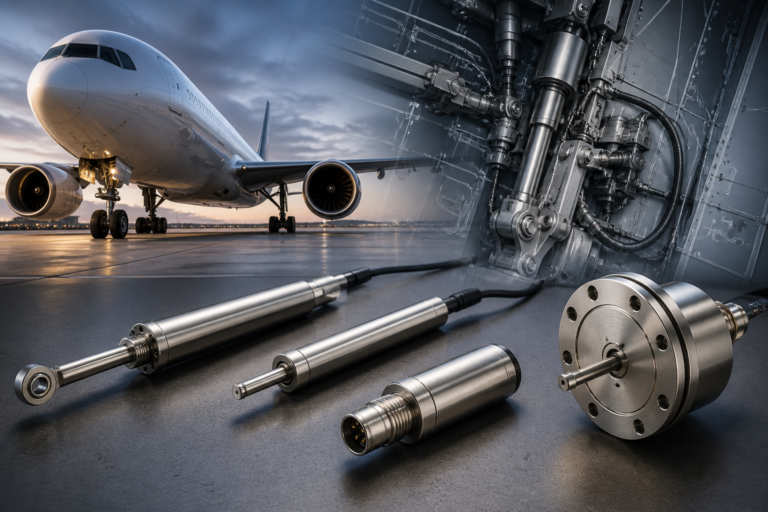

















In the modern aerospace industry, precision measurement is not simply a technical requirement; it is a foundation of safety, performance, and reliability. Aircraft systems depend on sensors that can detect the smallest movements and convert them into accurate electrical signals used by control systems and monitoring equipment.
Among the most trusted devices used for precise motion detection is the LVDT sensor. Engineers and aerospace technicians across the world rely on this technology to monitor mechanical displacement in critical systems such as landing gear assemblies, flight control mechanisms, and hydraulic actuators.
As aerospace technology continues to evolve, the demand for reliable position sensors is growing rapidly. High quality sensors ensure that aircraft systems operate smoothly, accurately, and safely throughout their service life.
Manufacturers such as Kavlico have contributed significantly to the development of advanced sensor technologies used in aerospace and industrial applications. Through precision engineering and rigorous testing standards, these sensors help maintain performance across demanding operating environments.
This article explores what an LVDT sensor is, how it works, the top benefits it offers, and why it remains one of the most widely used displacement measurement technologies in the aerospace industry.
What is an LVDT Sensor?
An LVDT sensor, or Linear Variable Differential Transformer, is a type of electromechanical device used to measure linear displacement. In simple terms, it detects movement along a straight line and converts that motion into an electrical signal that can be interpreted by monitoring systems.
The core structure of an LVDT sensor includes three main components:
• A primary coil
• Two secondary coils
• A movable magnetic core
When electrical current passes through the primary coil, it generates a magnetic field that induces voltage in the secondary coils. As the magnetic core moves inside the sensor body, the voltage output changes depending on the position of the core.
This change in voltage allows engineers to determine the precise displacement of a mechanical component.
Because of its high accuracy and durability, the LVDT sensor is widely used as a position sensor in industries that require precise motion detection, including aerospace, manufacturing, robotics, and industrial automation.
How LVDT Sensors Work as Position Sensors
A position sensor is designed to measure the location or movement of a mechanical object. In aircraft systems, position sensors help monitor the movement of flaps, landing gear, valves, and actuators.
LVDT sensors are particularly effective in these applications because they operate without physical contact between moving parts. The magnetic core moves freely within the sensor housing, which eliminates mechanical friction and wear.
This non contact design allows LVDT sensors to maintain consistent accuracy over long periods of operation, even under harsh conditions such as vibration, temperature changes, or pressure fluctuations.
For aerospace engineers, this reliability makes LVDT technology one of the most dependable solutions for monitoring mechanical displacement.
Top 10 Benefits of LVDT Sensors
Extremely High Accuracy
One of the most important advantages of an LVDT sensor is its exceptional measurement accuracy. These sensors can detect extremely small movements, making them ideal for precision applications in aerospace systems.
Non Contact Operation
Because the internal core does not physically touch the coils, LVDT sensors experience minimal mechanical wear. This greatly extends their operational life.
Long Service Life
The absence of friction allows LVDT sensors to operate reliably for millions of cycles without performance degradation.
High Reliability in Harsh Environments
Aircraft environments expose components to vibration, extreme temperatures, and pressure changes. LVDT sensors are designed to function reliably under these demanding conditions.
Excellent Repeatability
LVDT sensors provide consistent measurements every time the same position is reached, ensuring dependable system performance.
Wide Measurement Range
These sensors can measure displacement across a wide range of distances, from very small movements to larger mechanical displacements.
Smooth Analog Output
LVDT sensors produce continuous electrical signals rather than step based outputs, which allows for smoother control system operation.
High Sensitivity
Even minor mechanical movement can be detected with high precision, making LVDT sensors valuable for sensitive aerospace instrumentation.
Resistance to Contamination
The sealed design of many LVDT sensors protects them from dust, moisture, and other environmental contaminants.
Low Maintenance Requirements
Because they contain very few moving parts, LVDT sensors require minimal maintenance compared to many other measurement technologies.
Common Uses of LVDT Sensors
LVDT sensors are used across many industries, but they play a particularly important role in aerospace engineering. Their ability to provide highly accurate displacement measurements makes them suitable for numerous aircraft systems.
Aircraft Landing Gear Monitoring
Landing gear systems must operate with precise positioning to ensure safe takeoff and landing. LVDT sensors are often used to measure the movement and deployment status of landing gear components.
Flight Control Systems
Aircraft control surfaces such as flaps, rudders, and ailerons rely on accurate position monitoring. LVDT sensors provide feedback that allows pilots and control systems to maintain stable flight conditions.
Hydraulic Actuators
Hydraulic systems are responsible for moving many mechanical parts within an aircraft. LVDT sensors help track actuator movement and verify correct system operation.
Engine Control Systems
Engine components require accurate monitoring to maintain optimal performance. Position sensors like LVDTs help measure valve positions and other mechanical adjustments.
Industrial Automation
Beyond aerospace, LVDT sensors are widely used in robotics, manufacturing equipment, and testing systems where precise motion measurement is required.
The Role of Kavlico Sensors in Aerospace Technology
Advanced aerospace sensors must meet extremely strict performance and reliability standards. Manufacturers such as Kavlico have developed sensor technologies that meet the demanding requirements of modern aircraft systems.
These sensors are designed to operate in environments where reliability is critical. Aerospace engineers depend on precision sensors to maintain flight safety, detect mechanical changes, and support automated monitoring systems.
The integration of high performance position sensors into aircraft systems ensures that engineers can monitor mechanical movement with confidence.
Why Aerospace Systems Depend on Position Sensors
Position sensors serve as a bridge between mechanical motion and electronic control systems. Without them, aircraft computers would not be able to determine the exact location of moving components.
In complex systems such as landing gear assemblies, flight control mechanisms, and engine systems, position sensors provide critical feedback that allows aircraft systems to operate correctly.
Accurate sensor data enables:
• Real time monitoring of mechanical movement
• Improved flight control system response
• Early detection of mechanical faults
• Enhanced safety and reliability
These capabilities make sensors like LVDT devices indispensable in modern aerospace engineering.
Future Trends in Sensor Technology
As aerospace technology evolves, sensor systems are becoming more advanced and integrated. Engineers are developing smarter sensors that combine displacement measurement with digital communication and data analytics.
These improvements will allow aircraft maintenance teams to monitor system performance more efficiently and detect potential issues earlier.
In the future, LVDT sensors and other position sensing technologies will likely play an even greater role in predictive maintenance systems and automated aircraft monitoring platforms.
Conclusion
Precision sensing technology is a cornerstone of modern aerospace engineering. Among the many sensor technologies available today, the LVDT sensor remains one of the most trusted solutions for accurate displacement measurement.
Its high reliability, non-contact design, and exceptional measurement accuracy make it ideal for demanding applications in aircraft systems, industrial automation, and advanced engineering environments.
From landing gear monitoring to flight control systems, LVDT sensors provide the data required to keep complex mechanical systems operating safely and efficiently.
As aerospace innovation continues to accelerate, advanced position sensing technologies will remain essential to maintaining the safety, reliability, and performance standards that the aviation industry depends on.