















Airplanes represent one of the most advanced achievements in modern engineering. Built to transport passengers and cargo efficiently across vast distances, aircraft combine aerodynamic design, structural strength, and intelligent systems to perform reliably under extreme conditions. While the visible structure of an airplane includes wings, engines, and the fuselage, the real sophistication lies in the integration of advanced sensors and precision components that enable accurate control, monitoring, and safety.
This comprehensive guide explains the major airplane parts, their functions, and how advanced aerospace sensors play a critical role in modern aviation systems. It is designed for both informational readers and industry buyers seeking high-performance aircraft components.
The Fundamentals of Aircraft Operation
Before exploring individual components, it is important to understand the four fundamental forces that act on an airplane during flight:
- Lift: The upward force generated by the wings
- Thrust: The forward force produced by engines
- Drag: The resistance created by air
- Weight: The downward force due to gravity
Every aircraft system is designed to manage these forces effectively. Modern airplanes rely not only on mechanical design but also on precise data provided by sensors to maintain balance and stability.
Wings: Generating Lift and Enabling Flight
The wings are the most critical part of any airplane. Their primary function is to generate lift by creating a pressure difference between the upper and lower surfaces as air flows over them. This allows the aircraft to overcome gravity and remain airborne.
Modern wings are engineered with several additional components to improve performance. Flaps and slats are used to increase lift during takeoff and landing, while ailerons help control roll movement. Winglets, commonly seen on commercial aircraft, reduce drag and improve fuel efficiency.
Behind these mechanical structures lies a network of sensors that ensure precision. Linear position sensors are used to monitor flap movement, while rotary sensors track the angular position of control surfaces. Force sensors are integrated into wing structures to measure stress and detect potential structural issues. These technologies are essential for maintaining safe and efficient flight operations.
Stabilizers: Maintaining Balance and Direction
At the tail of the aircraft are the vertical and horizontal stabilizers, which play a key role in maintaining stability.
The vertical stabilizer controls yaw, which is the side-to-side motion of the aircraft’s nose. The horizontal stabilizer controls pitch, which refers to the up-and-down movement. Together, these components ensure that the aircraft remains balanced and follows a stable flight path.
Advanced sensor systems are used to monitor and control stabilizer movement. Rotary position sensors provide accurate feedback on rudder angles, while position switches confirm the status of control mechanisms. Pressure sensors are often integrated into actuator systems to ensure smooth and reliable operation.
For aviation manufacturers and maintenance providers, selecting high-precision stabilizer sensors is critical for ensuring consistent performance and compliance with safety standards.
Control Surfaces: Enabling Aircraft Maneuverability
Control surfaces are movable sections of the aircraft that allow pilots to steer and maneuver during flight. The primary control surfaces include:
- Ailerons, which control roll
- Elevators, which control pitch
- Rudder, which controls yaw
These components work together to provide complete control over the aircraft’s orientation and direction.
Modern aircraft rely heavily on sensor-driven systems to operate these surfaces accurately. Rotary displacement sensors measure angular movement, while linear sensors track actuator positions. Force sensors help detect resistance and load variations, allowing the system to respond dynamically to changing conditions.
The integration of these technologies ensures that even small pilot inputs are translated into precise and controlled aircraft movements.
Flaps and Spoilers: Enhancing Performance During Takeoff and Landing
Flaps and spoilers are secondary control surfaces that significantly impact aircraft performance during critical phases of flight.
Flaps are located on the trailing edge of the wings and are deployed during takeoff and landing to increase lift. This allows the aircraft to operate at lower speeds while maintaining stability. Slats, positioned on the leading edge, further enhance lift by improving airflow.
Spoilers serve a different purpose. They disrupt airflow over the wings to reduce lift and help slow the aircraft during descent and landing. Spoilers also assist in roll control on some aircraft.
To ensure precise operation, these components are equipped with advanced sensors. Linear position sensors monitor flap deployment, while pressure sensors track hydraulic system performance. Position switches provide confirmation of component status, ensuring that all systems are functioning correctly.
For buyers in the aerospace industry, investing in reliable flap and spoiler sensor systems is essential for safety and operational efficiency.
Fuselage: The Structural Core of the Aircraft
The fuselage is the main body of the airplane, designed to hold all components together while providing space for passengers, cargo, and critical systems. It must be strong enough to withstand pressure differences at high altitudes while remaining lightweight for efficiency.
Inside the fuselage, multiple sensor systems work continuously to maintain safe conditions. Pressure sensors monitor cabin pressurization, ensuring passenger comfort and safety. Temperature sensors regulate environmental conditions, while force sensors assess structural integrity.
In addition, the fuselage houses many of the aircraft’s electronic systems, making it a central hub for data collection and processing. High-quality sensor integration within the fuselage is crucial for maintaining reliability and meeting regulatory standards.
Cockpit Controls: The Command Center
The cockpit is where pilots interact with the aircraft. It contains control systems, displays, and interfaces that allow pilots to manage every aspect of flight.
Modern cockpits are highly advanced, relying on digital systems and real-time data. Sensor inputs from across the aircraft are processed and displayed, enabling pilots to make informed decisions quickly.
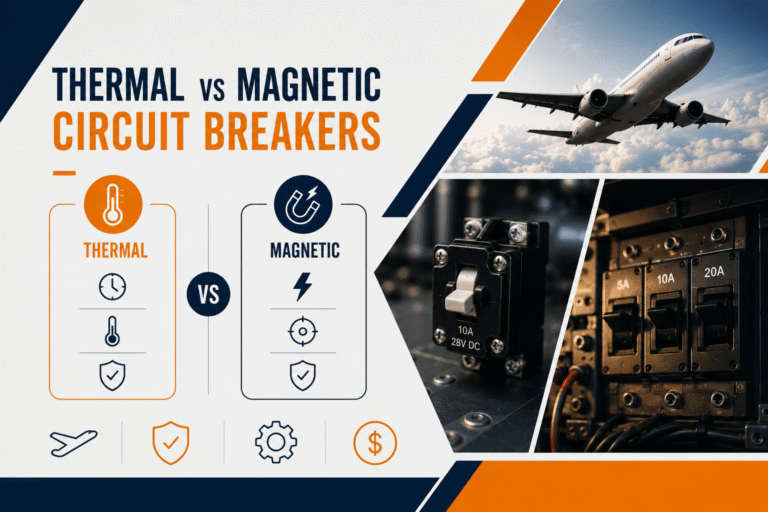
Key components within the cockpit include control interfaces, circuit breakers, and monitoring systems. Circuit breakers protect electrical systems from overload, while integrated sensors provide continuous feedback on aircraft performance.
For aviation businesses, sourcing advanced cockpit control systems and reliable electrical components is essential for ensuring operational safety and efficiency.
Aircraft Sensors: The Backbone of Modern Aviation
While traditional aircraft relied heavily on mechanical systems, modern aviation depends on advanced sensors to deliver accurate and reliable performance.
Several types of sensors are commonly used in aircraft:
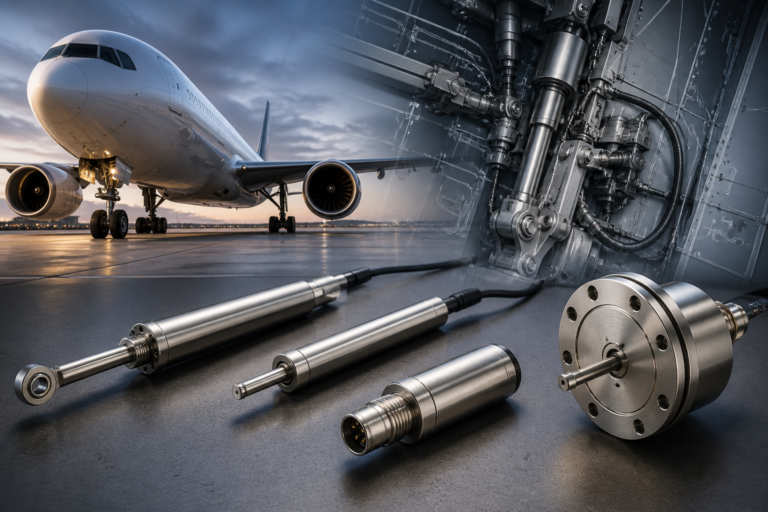
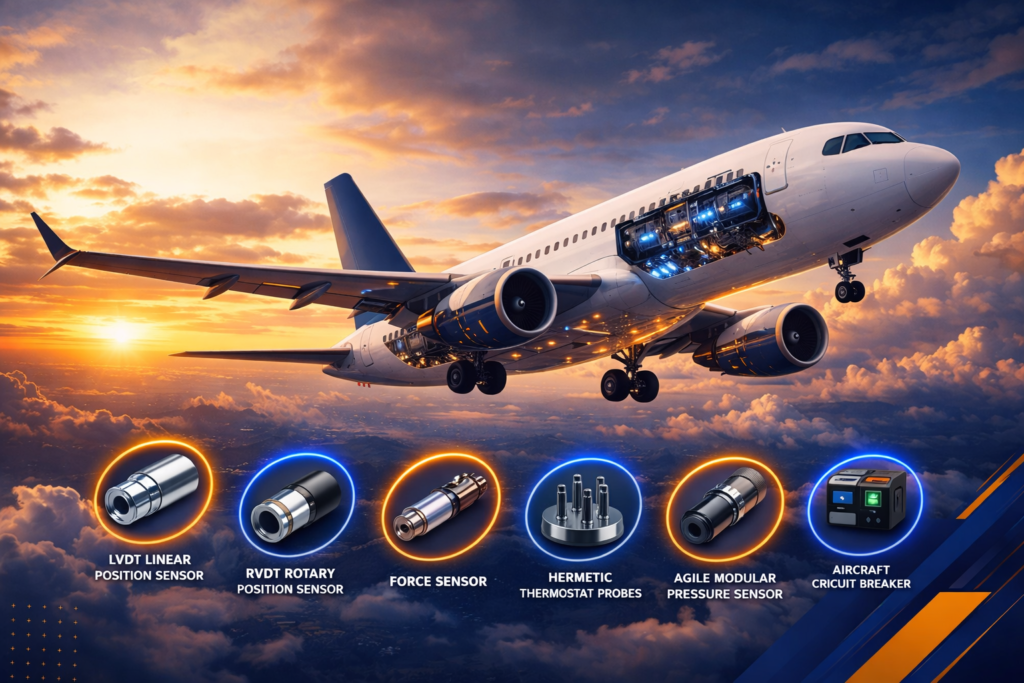
Linear position sensors measure straight-line movement and are widely used in actuators and control surfaces. Rotary sensors measure angular displacement and are essential for monitoring rotational components. Force sensors detect stress and load, helping prevent structural failures. Pressure sensors ensure proper cabin and system pressure, while temperature sensors maintain optimal operating conditions.
Hermetic switches and thermostats are designed to operate in harsh environments, providing reliable performance even under extreme temperature and pressure conditions.
These sensors work together to create a comprehensive monitoring system that supports safe and efficient flight operations.
The Importance of High-Quality Aerospace Components
Aircraft operate in some of the most demanding environments, including extreme temperatures, high altitudes, and constant vibration. As a result, the quality of components used in aircraft systems is critical.
High-quality aerospace components offer several advantages. They improve safety by providing accurate and reliable data. They reduce maintenance costs by minimizing failures and downtime. They also enhance overall performance by ensuring that all systems operate efficiently.
For buyers and decision-makers in the aviation industry, choosing certified and tested components is essential. This includes selecting sensors and systems that meet international aviation standards and are designed for long-term durability.
Evolving Aircraft Designs and Configurations
While the basic principles of flight remain consistent, aircraft designs can vary significantly depending on their purpose. Commercial airliners, cargo planes, and military aircraft all have unique configurations tailored to their specific missions.
Some aircraft store fuel in the wings, while others use the fuselage. Engine placement can also vary, with some designs featuring engines mounted under the wings and others integrating them into the fuselage.
Despite these differences, all aircraft must maintain the balance of lift, thrust, drag, and weight. Advanced sensors play a crucial role in achieving this balance, regardless of the aircraft’s design.
Choosing the Right Aircraft Parts and Sensor Solutions
For businesses involved in aircraft manufacturing, maintenance, or system integration, selecting the right components is a strategic decision. The performance of an aircraft depends not only on its design but also on the reliability of its individual parts.
When evaluating aircraft components and sensors, several factors should be considered. Accuracy is essential for ensuring precise control and monitoring. Durability is important for withstanding harsh operating conditions. Compatibility with existing systems is also critical, as modern aircraft rely on integrated technologies.
Working with experienced suppliers who understand the requirements of the aerospace industry can help ensure that all components meet the necessary standards.
Conclusion
Airplanes are complex systems that rely on the seamless integration of structural components, control surfaces, and advanced sensor technologies. From wings and stabilizers to cockpit controls and fuselage systems, every part plays a vital role in ensuring safe and efficient flight.
The growing importance of sensors in aviation highlights the shift toward data-driven systems and intelligent control. By providing real-time information and precise feedback, these technologies enable aircraft to operate with greater accuracy and reliability.
For industry professionals and buyers, understanding airplane parts and their functions is more than just technical knowledge. It is a foundation for making informed decisions, improving performance, and ensuring safety in an increasingly advanced aviation landscape.