















Modern aircraft rely on thousands of components working together with exceptional precision. From the moment an aircraft begins taxiing to the moment it lands safely, numerous systems continuously monitor mechanical movement and performance. Among the technologies that make this possible are displacement sensors.
Displacement sensors play an important role in measuring how far a mechanical component moves within an aircraft system. This information is used by control systems, monitoring equipment, and maintenance teams to ensure that every part of the aircraft operates exactly as intended.
As aviation technology becomes more advanced, accurate measurement tools are becoming increasingly important. Engineers depend on reliable sensor technology to maintain safety, improve system efficiency, and support predictive maintenance strategies.
Understanding how displacement sensors work and why they are important helps aviation professionals appreciate the technology that supports safe and reliable flight operations.
What Is a Displacement Sensor?
A displacement sensor is a device designed to measure the distance a mechanical object moves from one position to another. In aerospace systems, these sensors detect linear or rotational movement and convert that motion into an electrical signal.
The signal generated by the sensor can then be interpreted by aircraft computers or monitoring systems. This allows engineers and control systems to determine the exact position of a component during operation.
For example, when an aircraft’s landing gear extends or retracts, displacement sensors help determine whether the movement has occurred correctly and whether the system has reached its final position.
Because aircraft systems must operate within extremely tight tolerances, even small measurement errors can affect performance. Displacement sensors provide the precision required to avoid such issues.
Common Applications of Displacement Sensors in Aircraft
Displacement measurement is required in many areas of an aircraft. These sensors are often integrated into systems where accurate position feedback is essential for proper operation.
Landing Gear Systems
Landing gear deployment is one of the most critical mechanical processes during a flight. Displacement sensors monitor the movement of landing gear components and confirm that they have reached the correct locked position before landing.
Flight Control Surfaces
Aircraft flight control surfaces such as flaps, rudders, and ailerons must move precisely in response to pilot commands. Sensors measure the movement of these surfaces and send feedback to flight control systems.
This ensures that the aircraft responds accurately to control inputs.
Hydraulic Actuators
Hydraulic actuators power many mechanical components inside an aircraft. Displacement sensors help track the movement of these actuators, ensuring that systems operate within their designed range.
Engine Control Mechanisms
Certain engine components require precise movement adjustments to maintain optimal performance. Sensors provide accurate feedback that allows engine systems to respond efficiently.
Benefits of Using Displacement Sensors in Aerospace
The aviation industry demands technologies that provide reliability, accuracy, and long operational life. Displacement sensors offer several advantages that make them ideal for aerospace applications.
High Measurement Accuracy
Precision measurement is essential for maintaining aircraft stability and system performance. Displacement sensors can detect very small movements, providing accurate data to control systems.
Reliable Performance in Harsh Environments
Aircraft operate under extreme conditions including vibration, temperature variations, and pressure changes. Aerospace sensors are designed to perform reliably even under these demanding conditions.
Long Operational Life
Many displacement sensors are designed to function for millions of operational cycles. This durability reduces the need for frequent replacements and helps maintain consistent performance.
Minimal Maintenance
Modern sensor technologies often require little maintenance because they contain few moving parts. This reduces downtime and maintenance costs for aircraft operators.
How Sensor Data Supports Aircraft Maintenance
In addition to supporting flight operations, sensor technology also plays a critical role in aircraft maintenance and inspection.
Maintenance teams analyze sensor data to monitor the performance of aircraft systems over time. By observing changes in mechanical movement, engineers can detect potential issues before they become serious problems.
This approach is known as predictive maintenance. Instead of waiting for a failure to occur, technicians use real time data to schedule maintenance activities proactively.
Predictive maintenance improves operational reliability while reducing unexpected downtime.
The Future of Aerospace Measurement Technology
As aircraft systems continue to evolve, sensor technology is also advancing rapidly. Modern aerospace sensors are becoming more integrated with digital monitoring systems and aircraft health management platforms.
In the future, sensors will likely provide even more detailed operational data, allowing airlines and maintenance teams to monitor aircraft performance with greater accuracy.
Advances in materials, electronics, and data processing will also help improve sensor durability and measurement precision.
These developments will support the aviation industry’s ongoing efforts to improve safety, efficiency, and reliability.
Conclusion
Displacement sensors are a critical part of modern aerospace engineering. By measuring mechanical movement with high accuracy, these sensors provide the data needed for aircraft systems to operate safely and efficiently.
From landing gear monitoring to flight control systems, displacement sensors support many essential aircraft functions. Their ability to deliver precise measurement data helps engineers maintain system reliability and detect potential issues before they impact operations.
As aviation technology continues to progress, reliable measurement tools will remain essential to ensuring safe and efficient aircraft performance.
Understanding the importance of displacement sensors highlights how advanced engineering technologies contribute to the safety and success of modern aviation systems.
FAQ
1. What is a displacement sensor used for in aircraft?
A displacement sensor in aircraft measures the movement of mechanical components such as landing gear, actuators, and flight control surfaces. The sensor converts this movement into electrical signals that aircraft systems use for monitoring and control.
2. Why are displacement sensors important in aerospace engineering?
Displacement sensors are important because they provide accurate measurement of mechanical movement. This helps aircraft systems maintain stability, improve flight safety, and ensure components operate within correct limits.
3. Where are displacement sensors commonly installed in aircraft?
These sensors are typically installed in landing gear systems, hydraulic actuators, engine control mechanisms, and flight control surfaces such as flaps and rudders.
4. What types of displacement sensors are used in aviation systems?
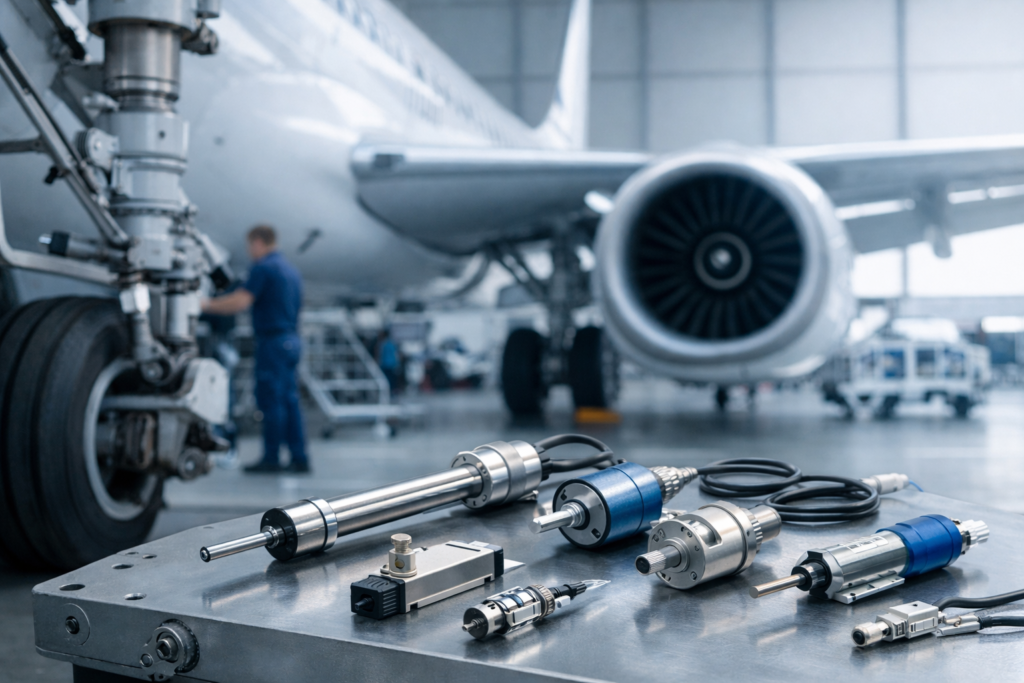
Common types include LVDT sensors, rotary position sensors, and magnetic displacement sensors designed to operate reliably in aerospace environments.
5. How do aerospace sensors improve aircraft maintenance?
Sensors provide real-time operational data that helps maintenance teams monitor system performance, detect early mechanical issues, and perform predictive maintenance to avoid unexpected failures.