















Aerospace landing gear is one of the most critical systems on any aircraft, and for operators across the UAE, GCC, and MENA region, its performance is directly linked to safety, reliability, and lifecycle operating cost. As regional fleets expand and modernise, decision-makers are paying closer attention to how high‑quality components, engineering expertise, and trusted distribution networks come together to support advanced landing gear solutions. This blog explores how specialised partners in the region help OEMs, MROs, and operators optimise aircraft landing gear systems, with a focus on premium components, smarter electrification, and dependable supply from authorised aerospace parts distributors.
Understanding the landing gear on modern aircraft
Landing gear on a plane is far more than a set of wheels; it is a complex, multi‑disciplinary system that must support the entire aircraft during taxi, take‑off, and landing, absorb impact loads, and withstand extreme environments over thousands of cycles. In a typical commercial airliner landing gear configuration, you will find a blend of structural, hydraulic, mechanical, and electrical subsystems working together with very tight tolerances and strict certification requirements.
The landing gear of a plane usually consists of:
- Main landing gear assemblies carry most of the aircraft’s weight and absorb impact on touchdown.
- Nose gear assemblies are responsible for steering on the ground and supporting the forward fuselage.
- Retraction and extension systems that move the gear from deployed to stowed positions and lock it securely in both states.
Beyond these visible elements, gear landing systems integrate sensors, circuit protection, wiring, actuators, and brake controls that must operate reliably in harsh conditions, including high temperature ranges and high‑load events. For operators in the GCC, sand ingestion, hot‑and‑humid conditions, and high utilisation rates further stress the importance of robust design and high‑performance airplane parts.
Why high‑quality aircraft parts matter for landing gear
Every component inside an aircraft landing gear system contributes to overall safety, from structural forgings and hydraulic cylinders to sensors, relays, and aircraft circuit breakers. When commercial or defense platforms rely on poor‑quality or non‑traceable parts, the risk of unplanned downtime, failures, and certification non‑compliance rises significantly.
For this reason, leading airlines, MRO providers, and OEMs in the UAE and wider GCC increasingly insist on working with:
- Authorised aircraft parts manufacturers with proven aerospace certifications and global references.
- Regional aircraft parts dealers and aircraft parts distributors capable of ensuring traceability, correct documentation, and on‑time delivery.
- Specialist aerospace parts distributors that understand landing gear requirements and can advise on product selection and integration.
This is particularly important for components that sit at the interface between mechanical and electrical domains, such as circuit breakers, high‑voltage contactors, and advanced sensors used in aircraft landing gear applications. When sourced from trusted aircraft parts suppliers and integrated by experienced engineering partners, these components can significantly improve reliability, reduce maintenance events, and support advanced monitoring strategies.
Electrical and electronic systems inside the landing gear
As aircraft evolve, more functions traditionally handled by hydraulics are being supported or replaced by electrical and electro‑hydraulic systems. This trend is visible in modern landing gear architectures, where electric motor‑driven actuators, advanced brake control units, and smart position‑sensing devices are becoming standard.
Key electronic and electrical elements within aircraft landing gear typically include:
- Power distribution devices such as contactors, relays, and busbar system components that route energy to actuators, brake systems, and control units.
- Sensors for position, load, and temperature monitoring that feed critical data to flight control and maintenance monitoring systems.
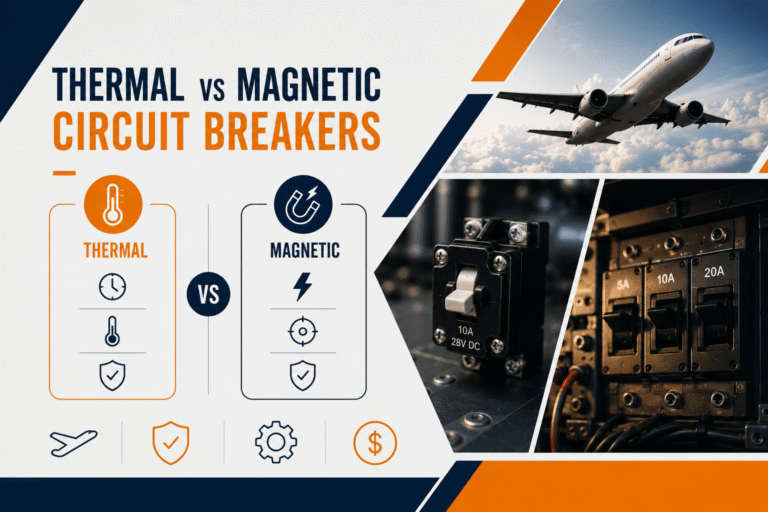
- Aircraft circuit breakers and protection devices that safeguard motors, wiring, and avionics from overloads, short circuits, and abnormal conditions.
For fleets operating in the UAE and GCC, these components must not only meet global aerospace standards but also withstand local environmental factors. Sand, heat, and high utilisation cycles can accelerate wear if parts are not properly specified, making it essential to work with aircraft parts distributors who understand both international standards and regional operating conditions.
The growing role of busbar systems and power distribution
Modern aircraft electrical architectures increasingly rely on optimised power distribution solutions to reduce weight, increase efficiency, and simplify installation and maintenance. In this context, busbar system designs, including laminated bus bars and specialised connector technologies, play an important role across multiple systems, from power electronics to landing gear actuation.
A well‑engineered bus bar connector and laminated busbar system can deliver several key benefits:
- Lower electrical resistance and improved thermal performance compared to traditional cabling.
- Reduced system weight and simplified routing, which are critical benefits in aerospace and EV platforms.
- Enhanced reliability thanks to robust construction and lower susceptibility to vibration and mechanical fatigue.
These same technologies are also widely used in EV / automotive and renewable energy systems, where high currents, compact packaging, and high reliability are equally important. Partners that can support both aerospace and EV applications with advanced busbar solutions bring added value to customers seeking cross‑sector innovation.
Sensors and protection devices for aerospace applications
Reliable sensing and protection are central to the safe operation of landing gear, as well as many other aircraft subsystems. In addition to structural and hydraulic components, aircraft designers and operators depend on specialised sensor suppliers and protection device manufacturers to deliver stable performance over long lifetimes.
In the aerospace context, typical requirements include:
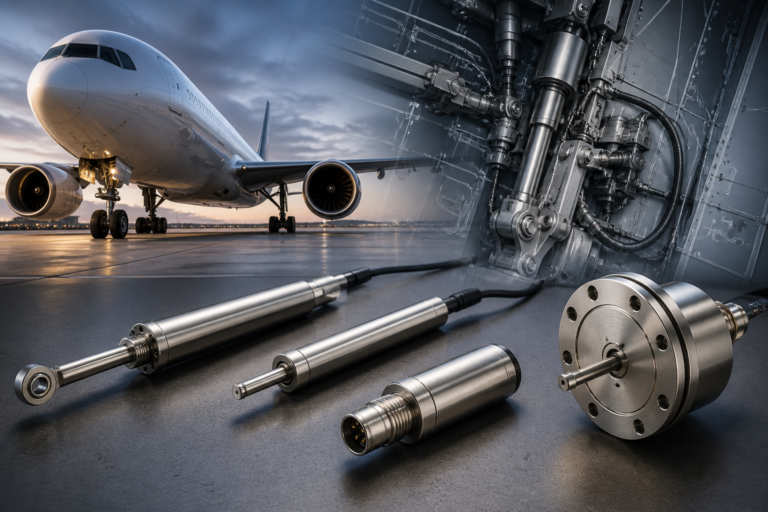
- High‑accuracy sensors for temperature, pressure, and position, helping monitor the status of landing gear, brakes, and doors.
- Ruggedised contactors and relays capable of switching high currents and voltages in demanding environmental conditions.
- Aircraft circuit breakers are engineered specifically for aviation applications, designed to offer predictable trip characteristics and long‑term reliability.
Regional access to a dedicated sensor supplier that UAE stakeholders can rely on is a key advantage, especially when that supplier is supported by an engineering‑driven distributor that understands specific platform requirements. With the right combination of sensors, circuit breakers, and power components, operators can implement condition‑based maintenance strategies that reduce downtime and improve fleet availability.
Importance of authorised aerospace parts distributors in UAE and GCC
The aerospace supply chain is heavily regulated, and operators must be able to demonstrate the origin, quality, and compliance of every aircraft part they install. Within the UAE and GCC, the role of authorised aerospace parts distributors is therefore central to ensuring reliability across fleets in both civil and defence segments.
When selecting airplane parts suppliers and aeroplane parts partners, key considerations typically include:
- Whether the distributor is an authorised partner of recognised aircraft parts manufacturers and technology brands.
- The depth of technical support includes application engineering, product selection guidance, and documentation support.
- Regional footprint and logistics capabilities, enabling quick delivery across GCC and MENA markets with proper export control compliance.
By working with established aircraft parts dealers that combine engineering services with distribution, operators can reduce risk and streamline procurement while ensuring that every component—from landing gear assemblies to aircraft circuit breakers—meets the required standards. This is especially important for aircraft landing gear, where the consequences of component failure are exceptionally high.
Regional engineering support for landing gear and critical systems
Beyond parts supply, many organisations in the GCC region look for engineering partners that can support system‑level design, integration, and troubleshooting of aerospace platforms. This includes assistance with landing gear upgrades, retrofits, and modernisation programmes, where electrical, mechanical, and software considerations must be addressed together.
Engineering‑focused distributors and service providers typically support aerospace clients through:
- Application engineering to align product selection with platform performance targets, certification requirements, and environmental constraints.
- Design support for integrating new sensors, contactors, or busbar system elements into existing landing gear or power distribution architectures.
- Failure analysis and root‑cause investigations when issues arise in service, helping operators refine maintenance strategies and component choices.
With the UAE positioning itself as an aerospace and MRO hub for the wider region, the ability to tap into local engineering expertise combined with global‑brand components is a major competitive advantage for airlines, OEMs, and defense organisations alike.
Landing gear reliability, maintenance, and lifecycle cost
For operators, landing gear performance is often measured not only by safety metrics but also by lifecycle cost, maintenance intervals, and downtime statistics. Each unplanned removal or delay tied to landing gear or associated electrical systems can generate significant financial and reputational impact.
Several factors influence lifecycle performance:
- The quality and specification of structural and electro‑mechanical components used in the initial build or retrofit.
- The reliability of sensors, contactors, and aircraft circuit breakers is responsible for monitoring and protecting equipment.
- The effectiveness of maintenance practices and access to reliable aircraft parts suppliers capable of supporting timely replacements.
By standardising on components from reputable aircraft parts manufacturers and working with established aerospace parts distributors, operators can improve parts commonality, streamline inventory, and support predictive maintenance regimes that minimise unexpected failures. Over time, this translates into higher fleet utilisation and a stronger safety record.
How digitalisation and data are changing landing gear management
Across aerospace fleets worldwide, digitalisation is transforming how operators manage critical systems like landing gear. Data from sensors, control units, and maintenance records is increasingly used to build predictive models, identify patterns, and fine‑tune maintenance plans for maximum availability and safety.
For aircrafts landing gear, digitalisation typically involves:
- Collecting high‑resolution data on loads, cycles, temperatures, and extension/retraction events.
- Integrating sensor outputs into central health‑monitoring systems that track trends over time.
- Using analytics to flag anomalies early, allowing targeted inspections and component replacements before failures occur.
To enable this, operators need not only robust sensors and protection devices but also a strong relationship with a sensor supplier UAE organisations can rely on for ongoing support and upgrades. With stronger digital tools, engineering teams can collaborate closely with aerospace parts distributors to align component choices with evolving data‑driven maintenance strategies.
Strategic considerations when choosing aircraft parts partners
Choosing the right partners for airplane parts and aerospace components is a strategic decision that affects safety, operational efficiency, and long‑term cost. For organisations in the UAE and GCC, the decision often revolves around finding a balance between global technology access and local engineering and logistics support.
When evaluating aircraft parts dealers or aircraft parts distributors, decision‑makers often consider:
- Depth of portfolio: The ability to provide a broad range of products, from sensors and contactors to busbar system components and aircraft circuit breakers.
- Sector expertise: Proven experience in key sectors such as Aerospace & Defense, EV / Automotive, Renewable Energy, and General Industrial applications.
- Regional coverage: A strong presence across GCC and MENA markets, enabling responsive support, short lead times, and robust after‑sales service.
Selecting a partner that combines these attributes helps ensure that every element within the aircraft landing gear and related systems is backed by solid engineering, reliable sourcing, and long‑term support. This integrated approach aligns well with the region’s ambitions to build world‑class aerospace capabilities and infrastructure.
The way forward for landing gear solutions in UAE and MENA
As fleets in the UAE and wider MENA region continue to grow, landing gear technology will remain a key focus area for safety, innovation, and operational optimisation. New aircraft platforms, more electric architectures, and increasing digitalisation will only raise the bar for component quality, system integration, and engineering support.
Operators, OEMs, and MRO providers that invest early in partnerships with specialised aircraft parts suppliers, aerospace parts distributors, and engineering‑driven organisations will be better positioned to:
- Enhance landing gear reliability and extend maintenance intervals through higher‑quality airplane parts and smarter monitoring.
- Reduce lifecycle costs by standardising components, improving logistics, and leveraging regional support in GCC and MENA.
- Support future upgrades, including deeper electrification and advanced sensing, as aerospace technology continues to evolve.
By combining best‑in‑class components—ranging from busbar system technologies and sensors to aircraft circuit breakers—with regional engineering expertise, the UAE and neighbouring markets can build a resilient, future‑ready ecosystem for aircraft landing gear and other critical aerospace systems